Are Pickleball Clinics Worth It?
Quick Answer: For most players between beginner and about 4.0, yes, if the group matches your skill level, the coach ratio leaves room for real feedback, and you practice what you learn between sessions. Miss any of those three conditions, and open play plus solo drilling is the smarter spend this season.
Worth it is a comparison, not a feeling. A clinic competes with the free alternative, which is playing more and drilling with a partner, and the honest answer depends on whether the clinic delivers something that free alternative cannot.
What does a clinic give you that free play doesn’t?
A clinic sells three things you rarely get from open play: correction, structure, and forced repetition of the shots you avoid.
Correction matters most. You can play three nights a week for a year and groove the same flawed dink the entire time, because nothing in open play tells you why the ball keeps sitting up. A coach spots the cause in minutes, and some programs now pair that correction with slow motion video, a practice covered in the guide to whether pickleball clinics use video analysis.
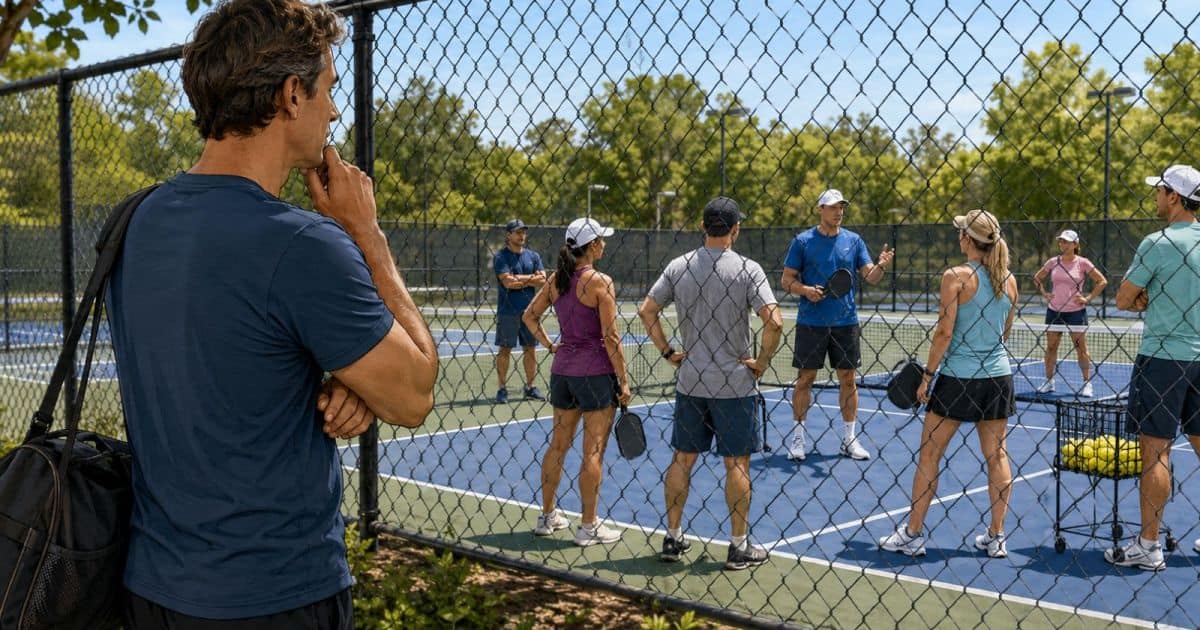
Structure is the second piece. A typical group clinic runs 1 to 2 hours and costs $20 to $50 per person, as of September 2026, and that window is usually built around a progression: you drill the third shot against rising pressure instead of only meeting it mid game with the point on the line. Forced repetition is the third piece. Open play lets you hide a weak backhand for years, while a decent clinic makes you hit forty of them before lunch. The full comparison with unstructured play is worked through in the guide to pickleball clinic vs open play, and the fair summary is that the two formats train different things. Improving players need both.
When is a clinic not worth the money?
The failure modes are consistent enough to list.
- Wrong level group. An all levels session serves nobody. The ball never challenges the strong players and never slows down for the new ones.
- Too many bodies per coach. Past eight or so players per court, feedback minutes per player collapse, and the session turns into supervised queuing instead of instruction.
- No curriculum. Play with occasional tips is a social hour priced like instruction, which is a fine trade only if you know that going in.
- No follow-through. A clinic plants corrections that fade within two weeks unless you drill them. Attendance without homework is the most common way the money disappears.
- The wrong bottleneck. A player who needs match experience, fitness, or simply more hours on court does not need a clinic yet.
None of that means clinics fail as a category. It means the value lives in the details, and those details are checkable before you pay: ask about the group cap, the level bands, and what the session actually covers. The walkthrough of what to expect at a pickleball clinic, and whether it is worth the cost, goes through those questions one by one. Group rates in the $20 to $50 range and private coaching at $50 to $100 or more per hour mean the math looks different for a one-off drop-in than for a season-long series, so compare like formats, not just sticker prices.
Do clinics actually make you better, and how fast?
Yes, with a lag, and that lag is what makes people doubt the purchase.
Temporary regression after a real correction is normal. Players often feel slightly worse for a week or two after a coach rebuilds a grip or a stroke, because the old pattern felt automatic and the new one feels foreign. The gains show up once the new pattern beds in, and that takes repetitions no single session can contain. Judging a clinic by how you play the next night at open play is unfair to the coach and to yourself.
Realistic pacing is covered in the guide to how many pickleball lessons or clinics it takes to improve, and the short version is that one clinic changes a shot, a series changes a game, and neither happens without practice between sessions. The players who compound clinic value are the ones who leave with two drills and actually run them during the week.
The honest accounting after a lot of both: an eight week series that rebuilds your third shot is worth every session. A single all levels drop-in clinic on vacation is a pleasant hour of light cardio. The two often cost about the same per session. Only one of them is instruction.
Who gets the most and least value from clinics?
Most value goes to beginners through intermediates who have a specific gap and the willingness to drill. Least value goes to the very new without any structure, the very advanced, and anyone unwilling to do homework between sessions.
Brand new players do well in explicitly beginner sessions, where the curriculum is orientation itself, and the walkthrough of what to expect at a pickleball clinic for beginners removes the first day nerves. The 3.0 to 4.0 band is the format’s sweet spot, because those players already have real patterns worth correcting and enough playing time for corrections to stick.
Above that level, generic clinics thin out fast. Advanced players usually need specialized high level sessions or private coaching, priced at $50 to $100 or more per hour, because the group’s median problem stops being their problem. At every level, the honest question is the same: will the drilling between sessions actually happen? A no answer does not make anyone a bad student. It makes open play the better purchase this season, and that is a useful thing to know before you book.
FAQ
Are pickleball clinics worth the money? For most improving players, yes, when the group matches your level, the coach ratio is small enough for real feedback, and you practice between sessions. Without those three things, spending on more court time is the better move.
Do clinics work better than just playing more? They fix different things. Play builds experience and instincts. A clinic corrects mechanics that unstructured play quietly reinforces. Most improvement wants both.
How many clinics does it take to see improvement? Expect a single clinic to change one shot and a multi week series to change your game, with a short adjustment dip after a real correction.
What makes a clinic a bad buy? An all levels grouping, more than about eight players per coach, no curriculum, or a bottleneck that is really about hours on court rather than mechanics.
Are clinics worth it for beginners? Beginner specific sessions, yes, strongly. A one to two hour session can compress weeks of confused trial and error into an organized morning.
Are clinics worth it for advanced players? Generic ones rarely pay off. Advanced players need specialized sessions or private coaching, since the group median stops matching their problem.
Why did I play worse right after a clinic? Rebuilt mechanics feel unnatural before they feel better. The dip is normal and shorter if you drill the change during the week.
What is the cheapest way to test if clinics help? One rating grouped series at a municipal or park district program, with honest homework between sessions, is the lower cost version of the same product.
Ready to test the proposition for yourself? Browse rating grouped programs in the Pickler Junction camps and clinics directory and compare group caps, level bands, and curriculums before booking a season.
Written by the Pickler Junction Team.