Indoor vs Outdoor Pickleballs: What Is the Difference?
Quick Answer: Indoor vs outdoor pickleballs differ in three ways: hole count, plastic hardness, and weight. By convention outdoor balls use 40 small holes and harder plastic to cut wind, while indoor balls use 26 larger holes and softer plastic for grip on gym floors. The rule itself allows 26 to 40 holes; the counts are manufacturer convention. Using the wrong one is immediately obvious.
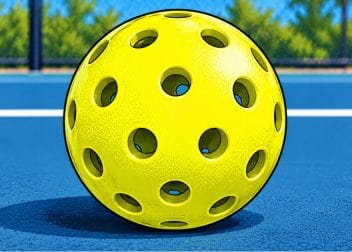
A pickleball is a hollow perforated plastic ball, and the perforation pattern is the whole story. The rulebook allows anywhere from 26 to 40 holes, and manufacturers use the two ends of that range to build two genuinely different balls.
What are the actual differences between indoor and outdoor pickleballs?
Hole count is the fastest way to tell them apart. Count the holes on one face and you will know instantly which ball you are holding.
Here is what separates them:
- Hole count. Outdoor balls conventionally use 40 small holes and indoor balls 26 larger ones. Both sit inside the permitted 26 to 40 range rather than being set by rule.
- Plastic hardness. Outdoor balls are made from harder, more brittle plastic. Indoor balls are softer and more flexible.
- Weight. Outdoor balls sit at the heavier end of the legal range, which runs from 0.78 to 0.935 ounces.
- Seam construction. Outdoor balls are typically molded in two halves and welded, which is where they eventually split.
- Surface texture. Indoor balls tend to have slightly more surface grip, which matters on a smooth gym floor.
Both live inside the same legal envelope. The rulebook sets the diameter at 2.874 to 2.972 inches for every approved ball, so an indoor and an outdoor ball are the same size. They just are not the same object in your hand.
Why do outdoor pickleballs have more holes?
To fight wind. More holes and smaller holes give the ball a more predictable flight in moving air, which is the single biggest problem outdoor play has to solve.
The harder plastic serves the same purpose. A stiffer ball holds its shape through contact, comes off the paddle faster, and is less easily pushed around by a crosswind. That is why outdoor play feels quicker and flatter than indoor play even when the same people are on the court.
The tradeoff is durability. Hard plastic in cold weather is brittle plastic, and outdoor balls crack rather than go soft. If you have ever had a ball split mid rally on a January morning, that is the tradeoff in action.
Why do indoor pickleballs feel so different?
Softer plastic and fewer, bigger holes make the ball slower and grabbier. It comes off the paddle with less pace and takes spin more readily, which pushes indoor games toward longer rallies and more touch.
Indoor balls also do not need to fight anything. A gym has no wind, so the design can optimize for feel and for behavior on a smooth surface instead. The result is a ball that rewards patience.
The failure mode is different too. Indoor balls rarely crack. They go soft, get scuffed on the floor, and gradually lose their bounce until nobody can quite say when they stopped being good. Our guide to how long pickleballs last covers how to tell when either type is finished.
What happens if you use the wrong ball?
Nothing dangerous, and everything feels wrong.
An indoor ball outdoors is a kite. Any breeze moves it, drives die in the air, and your timing goes immediately. An outdoor ball indoors is the opposite problem: it is fast, loud, and skids off a gym floor in a way that turns soft games into reflex contests. Neither is unplayable. Both teach you habits that will not transfer.
The more common version of this mistake is seasonal. Players who go indoors for winter and outdoors for summer switch balls without switching expectations, spend a month wondering why their third shot drop has abandoned them, and never connect the two. This catches out good players every spring.
Does anything else change between indoor and outdoor play?
The ball, mostly. Almost everything else is deliberately identical.
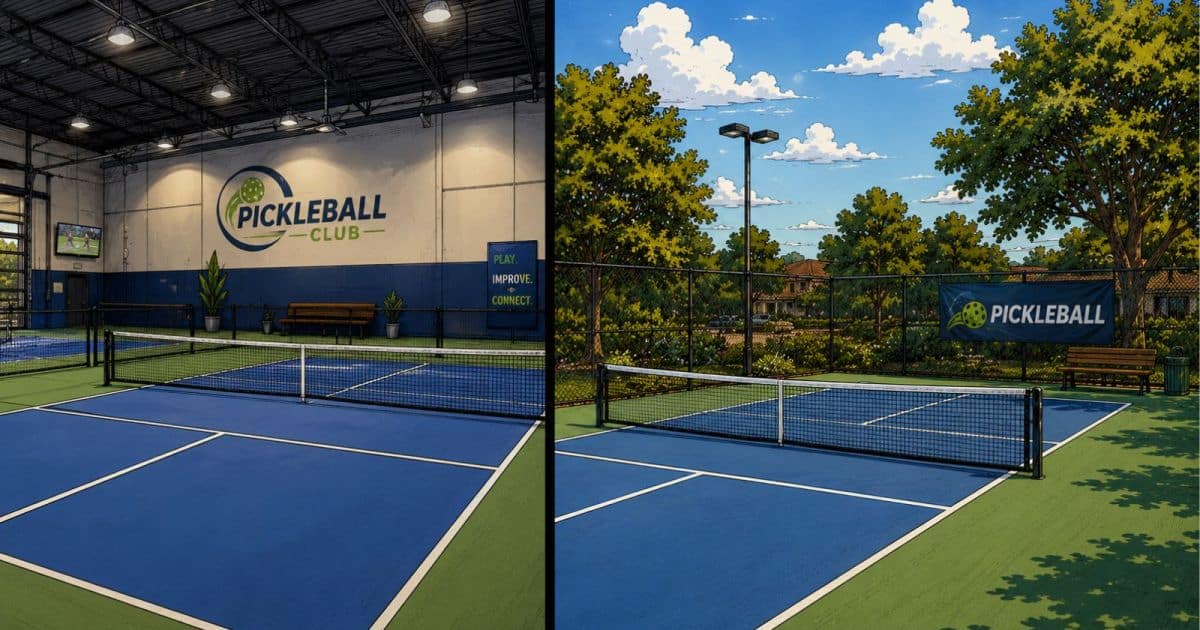
The court is the same 20 by 44 feet either way. The net height does not change indoors, and neither does the scoring. What tends to differ is the setup: indoor courts are often taped onto gym floors with a portable frame, while outdoor courts usually have posts set in concrete. Our comparison of portable and permanent nets covers what that difference costs you in stability over a season.
Footwear is the other real variable, since gym floors and outdoor hard courts want different soles. That one is worth taking seriously, because it is a genuine injury question rather than a feel question.
Which ball should you buy?
Buy for where you actually play, and buy both if you play both.
If you are outdoors most of the time, a sleeve of outdoor balls is the obvious purchase, and it is worth buying a brand your local group already uses so everyone is playing the same ball. If you split seasons, own both and label the container, because the two are easy to mix up in a bag.
If you are shopping in person, the hole count settles it in about two seconds. Approved balls carry the governing body’s stamp, which tells you the ball is legal for sanctioned play but says nothing about whether it is the right one for your surface. That part is on you.
FAQ
How many holes does an outdoor pickleball have? Conventionally forty small holes, against 26 larger ones on indoor balls. The rule permits 26 to 40, and the rulebook only notes that the larger-holed ball is customarily used for indoor play. Counting them is still the fastest way to tell the two apart.
Can you use an indoor pickleball outside? You can, but it will not play well. The lighter, softer ball is pushed around by even a light breeze and loses pace quickly in the air.
Can you use an outdoor pickleball indoors? Yes, and some groups do. It plays faster, louder, and skids more on a gym floor, which changes the character of the game.
Are indoor and outdoor pickleballs the same size? Yes. The rulebook sets diameter at 2.874 to 2.972 inches for all approved balls, so the difference is in holes, hardness, and weight rather than size.
Which ball lasts longer? It depends on how they fail. Outdoor balls crack, especially in cold weather. Indoor balls go soft and lose bounce. Neither reliably outlives the other.
Why does my drive keep sailing long after switching balls? Because the outdoor ball is heavier and harder and carries differently than the indoor ball. Take a little pace off and the timing comes back within a session or two.
Do pro tournaments use a specific ball? Sanctioned events specify an approved ball, and the approved list is set by the governing body. Recreational play uses whatever the group has agreed on.
Is a more expensive ball actually better? Sometimes, mostly in consistency and crack resistance rather than in how it plays on day one. The bigger factor is playing the same ball your regular group uses.
Stocking up or replacing a cracked sleeve? Our gear and accessories listings are the place to start, and if you are trying to work out which ball your local group plays, the public courts directory will tell you where to go ask.
Written by the Pickler Junction Team.