How Are Pickleball Rules Changed Each Year?
Quick Answer: Pickleball rules are changed on an annual cycle. USA Pickleball members submit proposals in the spring, the public comments on them, the Rules Committee reviews and votes, and the Board of Directors gives final approval. The new rulebook is published by December 20 and takes effect January 1.
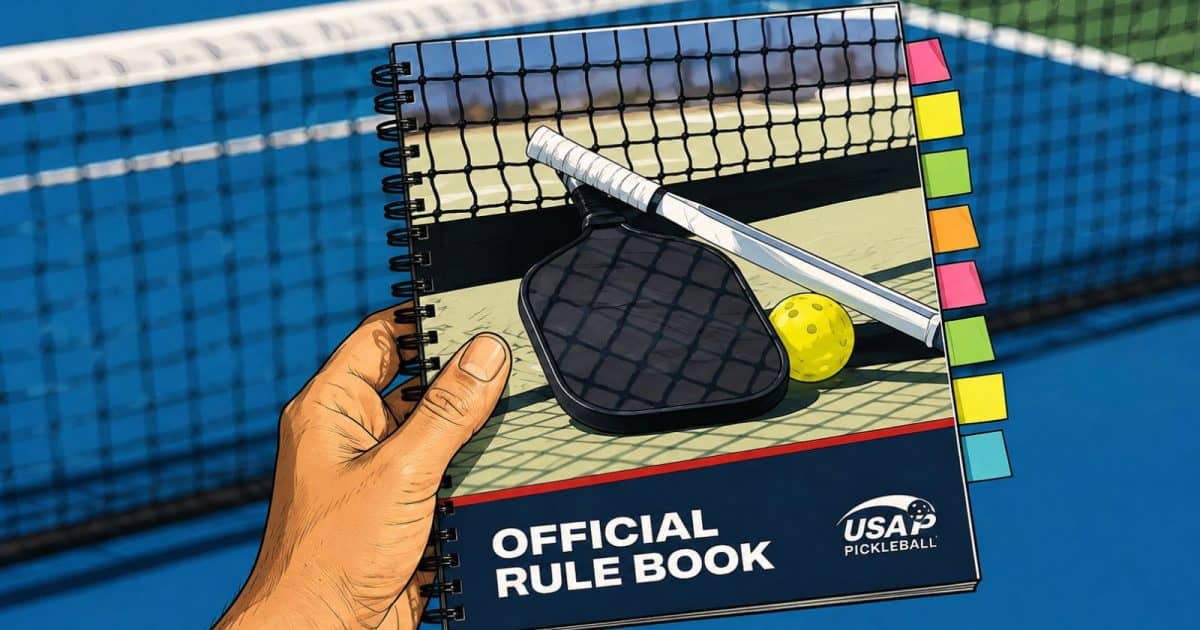
The rulebook is the document that governs sanctioned play in the United States, and it is revised once a year rather than whenever a debate flares up on social media. That slowness is intentional.
Who can propose a rule change?
USA Pickleball members at the Challenger or Champion membership levels can submit proposals. That is a low bar deliberately, because the organization wants rule ideas coming from people who actually play.
A proposal can be a brand new rule or a revision to an existing one. Editorial cleanups, meaning changes to wording rather than substance, go through the same tracking system.
You do not need to be a referee, a pro or a club official. You need a membership and a clear description of the problem you think the rule solves.
What is the annual timeline?
The cycle runs on published dates, and they repeat each year.
- April 1. The submission window opens for proposals aimed at the following year’s rulebook.
- June 1. Submission deadline. Nothing new enters the process after this date.
- June 15. Public comment closes. Anyone can comment on any proposal, member or not.
- June onward. The Rules Committee reviews each proposal alongside the comments and votes on it.
- Autumn. Approved changes go to the Board of Directors for final approval.
- By December 20. The new rulebook is published so players and referees can read it before it counts.
- January 1. The new rules take effect.
Every proposal receives a tracking number that stays with it through the whole process, and everything lands in the New Rulebook Database so the trail is public.
Why does the public comment period matter?
Because it is the part most players do not know exists, and it is open to everyone.
Comments sit alongside each proposal when the committee reviews it. A proposal with fifty thoughtful comments explaining an unintended consequence carries information a committee of a dozen people cannot generate on their own.
The window is short. Two weeks between the submission deadline and the comment close is not long enough to notice by accident. If you care about a rule, June is the month to be paying attention.
What kinds of changes actually get through?
Two categories dominate. The first is clarification, where a rule was already the rule but the wording let people argue. The second is codification, where something that had been handled tournament by tournament becomes official.
The drop serve is the cleanest example of the full arc. It entered as a provisional rule, was tested through live play, and became a permanent part of the serving rules. Our article on whether the drop serve is legal covers where it stands now.
Structural changes to how the game is scored move much more slowly. Rally scoring has been used in some professional formats for years without replacing traditional scoring in the standard rulebook, which tells you something about how conservative the process is.
What about professional tours?
This is where confusion starts. The professional tours can and do use their own formats and rule variations, including scoring systems that differ from the USA Pickleball rulebook.
What you watch on a broadcast is therefore not always what governs your local sanctioned tournament. If a rule you saw on television does not match your event, that is usually the explanation.
The referee was right.
How do you keep up with changes?
Read the change document rather than the whole rulebook. USA Pickleball publishes a summary that lists what changed and why, and it takes about twenty minutes.
December is the month to do it. The rulebook posts by December 20 and applies from January 1, which gives you roughly a week and a half of grace before it matters at a sanctioned event.
Frequently asked questions
How often do pickleball rules change? Once a year, with a new rulebook effective January 1. Mid year changes are rare and reserved for corrections.
Do I need a membership to comment on a proposal? No. Submission requires a Challenger or Champion membership, but public comment is open to anyone.
Where can I read proposed rules? USA Pickleball publishes proposals with tracking numbers on its rules submission site during the cycle.
Who has final say? The Board of Directors approves the changes after the Rules Committee reviews and votes on them.
Do the changes apply to recreational play? Only if your group chooses to follow them. The rulebook governs sanctioned tournaments. Open play at your local courts runs on whatever your community agrees on.
What is a provisional rule? A rule adopted for a trial period so it can be evaluated in real play before becoming permanent or being dropped.
Do international rules match? Not always. Other national governing bodies and international federations maintain their own rulebooks, though there is substantial overlap.
Where do I start if I want to understand the basics? Our guide to the 5 basic rules of pickleball covers the fundamentals before you get into the annual revisions.
The process is more open than it looks, and April through June is when your opinion can actually enter the record. Our overview of USA Pickleball explains the wider role of the organization, and you can find the state and regional bodies that run sanctioned play near you in our pickleball associations directory.
Written by the Pickler Junction Team.