
Can Pickleball Help Manage Type 2 Diabetes? What the Research Shows
Quick Answer: Yes. Regular moderate exercise like pickleball helps the body use insulin more effectively, and the American Diabetes Association says physical activity makes cells more sensitive to insulin, which lowers blood glucose. The Centers for Disease Control and Prevention recommends at least 150 minutes of moderate activity a week. Check blood sugar around play and talk with your doctor first.
Type 2 diabetes affects how your body regulates blood sugar, and physical activity is one of the most effective tools for managing it. Pickleball offers a moderate-intensity, social form of exercise that fits easily into a regular weekly routine.
Can pickleball help with type 2 diabetes?
Yes, as a form of regular moderate-intensity exercise. According to the American Diabetes Association, being physically active makes your cells more sensitive to insulin, so it works more effectively to lower your blood glucose. Pickleball is a moderate-intensity sport, which places it inside the kind of activity the Centers for Disease Control and Prevention recommends for diabetes management: at least 150 minutes of moderate-intensity physical activity a week, or about 30 minutes on most days.
Pickleball-specific research on diabetes outcomes is still limited, but the sport delivers a similar aerobic demand to brisk walking or doubles tennis, both of which fall inside that recommended range. For a broader look at how the sport affects fitness, see the guide on whether pickleball is good exercise.
Why is pickleball a good fit for diabetes management?
Pickleball fits diabetes management well because it is moderate, repeatable, and easy to keep doing. The American Diabetes Association notes that even losing 10 to 15 pounds can have a significant impact on health for someone managing type 2 diabetes, and steady activity like pickleball supports that kind of gradual weight change.
What makes it a workable fit:
- Moderate aerobic intensity that matches the level of activity the CDC recommends for blood sugar control, without requiring high-impact movement.
- A social, doubles format that keeps a game going for an hour or more, which supports the kind of consistency exercise for diabetes requires.
- Continuous movement during play, which supports circulation, a factor worth watching for anyone managing diabetes-related nerve or circulation changes. Some players also ask whether compression gear helps with that; see does compression clothing help pickleball.
- Simple equipment and rules, so a new player can start with a short lesson and build up match time gradually.
Spreading play across two to three sessions a week, rather than one long session, lines up with the CDC’s recommendation to spread the 150 weekly minutes across most days.
How do you play safely with type 2 diabetes?
Managing blood sugar around play, protecting your feet, and staying hydrated are the main precautions for a pickleball player with type 2 diabetes.
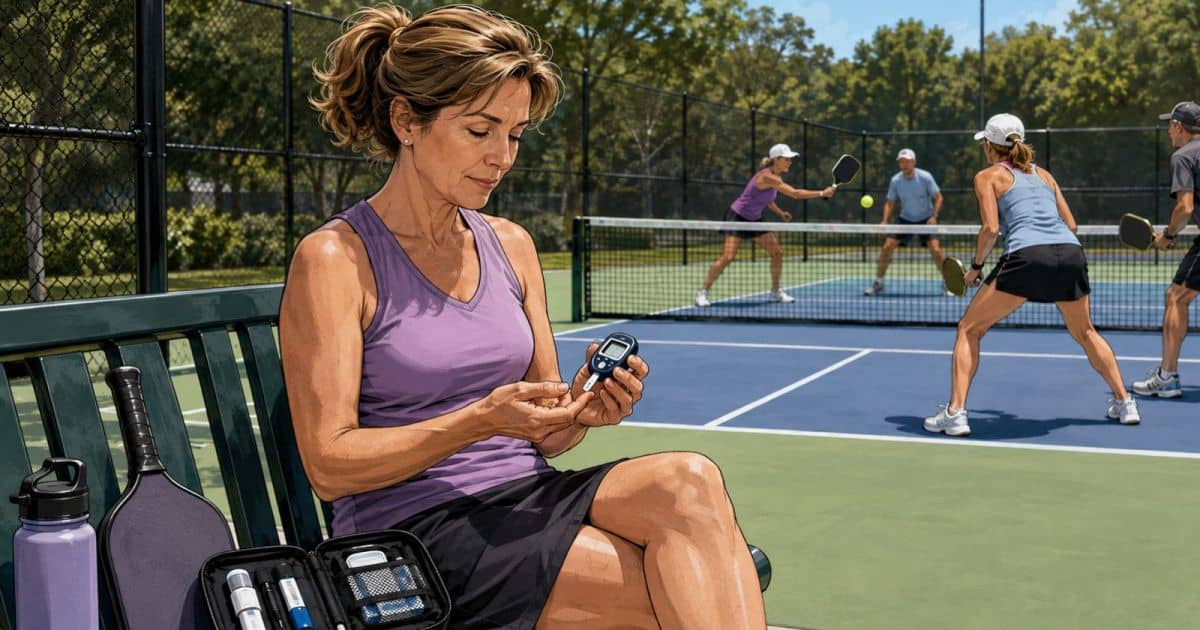
Check your blood sugar before you start. Mayo Clinic recommends checking your blood glucose before exercise and using the reading to decide whether you are ready to play. Below 90 mg/dL, Mayo Clinic says your blood sugar may be too low to exercise safely, and recommends 15 to 30 grams of carbohydrate first. Between 126 and 180 mg/dL, Mayo Clinic considers you ready to exercise, while above 270 mg/dL, it calls that a caution zone where blood sugar may be too high to play safely.
Watch it during and after play. For longer sessions, Mayo Clinic recommends checking blood sugar about every 30 minutes and stopping if a reading drops to 70 mg/dL or lower. If you feel shaky, dizzy, or sweaty, treat it right away with about 15 grams of fast-acting carbohydrate, such as glucose tablets, juice, or a tablespoon of honey, per Mayo Clinic guidance. Mayo Clinic also notes that low blood sugar can show up 4 to 8 hours after exercise ends, so checking again later in the day is worth doing.
Protect your feet. Mayo Clinic recommends checking your feet every day for blisters, cuts, bruises, cracked skin, redness, or swelling, a step that matters more for players managing diabetes-related nerve damage (neuropathy), who may not feel an injury forming. Cushioned, well-fitting court shoes are part of that protection, and some players look at whether a supportive insole helps too; see do insoles help for pickleball.
Stay hydrated and coordinate with your care team. Dehydration can affect blood sugar readings, so drink water through a session. Talk with your doctor, a physical therapist, or a sports medicine provider before starting, especially if you take insulin or other glucose-lowering medications, or manage neuropathy, heart, or eye complications tied to diabetes.
Frequently asked questions
Can pickleball help manage type 2 diabetes? Yes. The American Diabetes Association says physical activity makes cells more sensitive to insulin, which lowers blood glucose, and pickleball is the kind of moderate-intensity activity that supports that effect.
How much pickleball should someone with type 2 diabetes play? The Centers for Disease Control and Prevention recommends at least 150 minutes of moderate-intensity activity a week, a target pickleball can help meet in two or three sessions.
What blood sugar level is safe to start playing? Mayo Clinic considers a reading of 126 to 180 mg/dL ready for exercise, while a reading below 90 mg/dL may be too low to play safely without first eating 15 to 30 grams of carbohydrate.
What if blood sugar drops during a game? Mayo Clinic recommends treating symptoms like shakiness or dizziness with about 15 grams of fast-acting carbohydrate, such as glucose tablets or juice, and stopping play if a reading falls to 70 mg/dL or lower.
Can low blood sugar happen after the game ends? Yes. Mayo Clinic notes that low blood sugar can occur 4 to 8 hours after exercise, so checking again later in the day is worthwhile.
Does pickleball help with weight and blood pressure too? Weight plays a role. The American Diabetes Association says losing 10 to 15 pounds can have a significant impact on health for someone with type 2 diabetes, and pickleball’s moderate intensity supports that kind of steady activity.
Is foot care important for pickleball players with diabetes? Yes, especially for players managing neuropathy. Mayo Clinic recommends checking feet every day for blisters, cuts, or cracked skin, and wearing cushioned, well-fitting shoes on court.
Should you talk to your doctor before starting? Yes. Coordinate with your doctor, a physical therapist, or a sports medicine provider before starting, especially if you take insulin or other glucose-lowering medications, or manage neuropathy, heart, or eye complications.
Pickleball can be a genuinely effective part of managing type 2 diabetes when it is paired with blood sugar monitoring, good footwear, and guidance from your care team. To find a local endocrinologist, physical therapist, or sports medicine provider, search the Pickler Junction physicians and therapists directory. This article is general information, not medical advice.
Written by the Pickler Junction Team.