
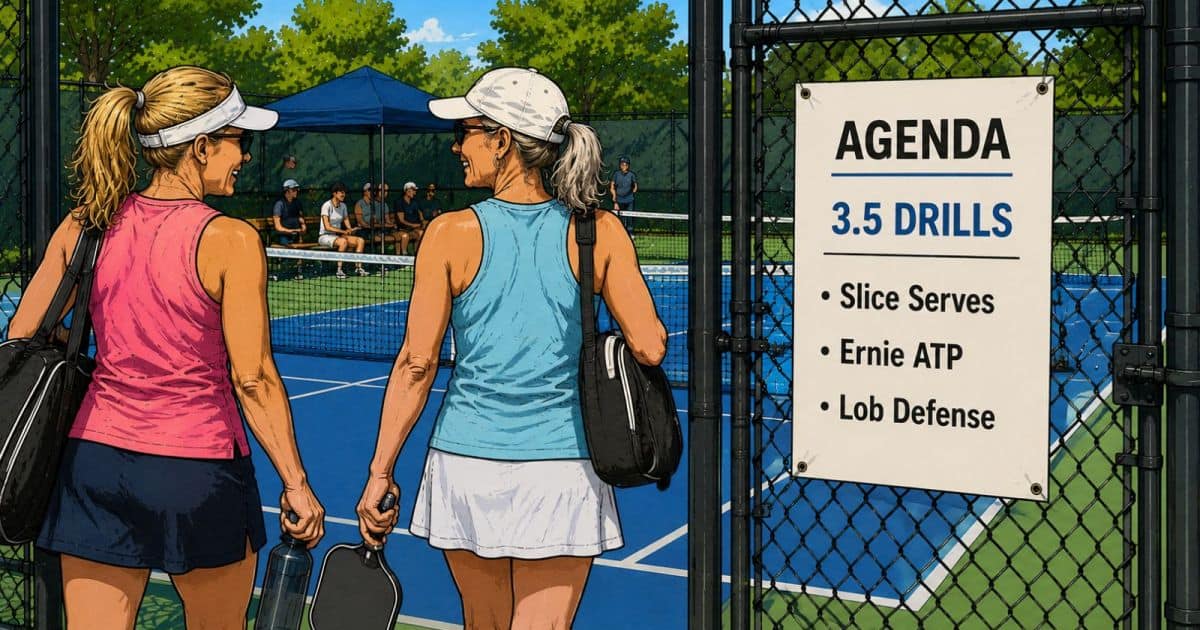
Is a Pickleball Clinic Right for a 3.5 Player? What to Look For
Quick Answer: Yes. A 3.5 level is a strong fit for a pickleball clinic, since you already rally, serve, and dink but still stall on third shots, transition-zone footwork, and shot selection. Look for a clinic labeled 3.0 to 4.0, a player-to-coach ratio of 4:1 to 6:1, and a stated skill focus rather than a generic all-levels session.
Is 3.5 a good level for a clinic?
USA Pickleball’s skill rating definitions describe a 3.5 player as someone who can consistently hit forehands with depth and control while perfecting shot selection and timing, with backhands still showing improved mechanics and moderate success. The same definitions note a moderate number of unforced errors per game, a player who is beginning to understand which balls are attackable, and a solid grasp of stacking strategy. That mix of solid ball-striking with gaps in shot selection and consistency is exactly the profile a clinic can sharpen fast.
DUPR, the Dynamic Universal Pickleball Rating, runs on a numeric scale from 2.000 to 8.000 built from match results, and DUPR groups the 3.000 to 3.999 band as intermediate, the same range a 3.5 label sits inside. A USA Pickleball skill rating and a DUPR number are not the same scale, but both put a 3.5 player in the same practical spot: past the fundamentals, short of advanced strategy.
The classic 3.5 wall is real, even if it is not an official term. You can rally, serve, and dink, but points leak in predictable spots: popping up third shots, getting stuck in the transition zone, and forcing low-percentage shots when a safer one was open. A clinic that names and drills those leaks moves you through the wall faster than open play alone.
For a 3.5 player, the problem is rarely power or athleticism. It is decision-making and a handful of soft-game mechanics, and those respond well to focused coaching.
What should a 3.5 player look for in a clinic?
A level-appropriate clinic with a tight ratio and a real focus, not a generic session. A beginner-focused clinic, like the sessions covered in the guide to what to expect at a pickleball clinic for beginners, will move too slowly for you, and a wide-open all-levels clinic will leave you undercoached at the exact level where you need the most attention.
What to look for:
- A level label in the 3.0 to 4.0 range, so the drills match your game.
- A small player-to-coach ratio, generally 4:1 to 6:1, so a coach can watch your shot selection and not just your strokes. The guide on what is a good player-to-coach ratio at a pickleball clinic breaks down why the ratio matters more than the price.
- A specific skill focus, like third shot drops, resets, or transition play, instead of a broad “all skills” label.
- Strategy and shot selection coaching, not just stroke mechanics.
- Video analysis, if it is offered, since seeing your own patterns on screen speeds up fixes that are hard to feel in the moment.
Group clinics typically run 1 to 2 hours, with 90 minutes the most common length, and cost $20 to $50 per person as of September 2026, based on Pickler Junction’s directory listings. If you are weighing whether that price is worth it, the breakdown on what to expect at a pickleball clinic and whether it is worth the cost walks through what you get at each price point.
The skills that move a 3.5 toward 4.0:
- A reliable third shot drop and the patience to use it.
- Cleaner transition-zone footwork and resets.
- Better shot selection, choosing the high-percentage ball over the flashy one.
- Consistent dinking with intent, not just back and forth.
How should a 3.5 player use a clinic to break the plateau?
Pick one weakness, drill it, then test it in games. Trying to fix everything at once is the common mistake at this level. Improvement comes from targeting the one or two leaks costing the most points, then locking them in.
A plan that works:
- Diagnose your biggest leak, ideally with a coach or by filming a few games.
- Take a specialty clinic aimed at that one skill.
- Drill it deliberately between sessions, not just during games.
- Apply it in open play, even if it costs points at first, until it holds under pressure.
For the broader format question, see the comparison of a pickleball clinic vs. open play, and for the fastest route through the plateau, the guide on how to improve at pickleball fast.
Frequently asked questions
What level pickleball clinic should a 3.5 player take? One labeled for 3.0 to 4.0 players, or a specialty clinic that targets a skill you want to fix, such as third shot drops. A beginner intro or a wide-open all-levels session will not match your game as closely.
Will a clinic help me get from 3.5 to 4.0? Yes, especially a clinic focused on third shots, transition play, and shot selection. USA Pickleball’s skill rating definitions place developing shot selection and patience right at the line between a 3.5 and a 4.0 player, and pairing a clinic with deliberate practice between sessions speeds up the jump.
Why do players plateau at 3.5? The plateau usually comes from decision-making and soft-game mechanics rather than athleticism. Popping up third shots and forcing low-percentage shots are common patterns at this level, and both respond to focused coaching.
Should a 3.5 player choose private lessons or a group clinic? Both help, and the right pick depends on budget and goals. A group clinic costs less per hour and adds strategy work against different opponents, while a private lesson focuses on fixing one mechanic fast. Combining both covers more ground than either alone.
How long does a typical pickleball clinic run, and what does it cost? Group clinics generally run 1 to 2 hours, with 90 minutes the most common length, and cost $20 to $50 per person, based on Pickler Junction’s directory listings. Specialty and private sessions can run longer and cost more per person.
Is video analysis worth it at 3.5? Yes. Seeing your own patterns, like where you stand in the transition zone, often reveals fixes that are hard to feel in the moment during a rally.
How long until a 3.5 player sees improvement? You can leave a clinic playing better the same day, but locking in a 3.5-to-4.0 jump usually takes several sessions plus regular practice over several weeks.
What is a DUPR rating, and does it match a 3.5 skill rating? DUPR is a numeric rating that runs from 2.000 to 8.000 based on match results, and DUPR groups the 3.000 to 3.999 band as intermediate, the same range a 3.5 label sits inside. A DUPR number and a USA Pickleball skill rating are built differently, but both describe the same practical stage of play.
A 3.5 rating is a strong place to invest in coaching, since the fixes are specific and the results tend to show up fast. Search the Pickler Junction pickleball camps and clinics directory to find a level-appropriate clinic near you.
Written by the Pickler Junction Team.