Is Pickleball Good for Balance and Fall Prevention in Older Adults?
Quick Answer: Pickleball can help improve balance, agility, and the leg strength that support fall prevention, since the game constantly challenges your stability and reactions. There is a catch, though: falls are also one of the most common pickleball injuries for older adults. So pickleball supports fall prevention best when paired with dedicated balance and strength training and sensible precautions on the court.
Balance is your body’s ability to stay stable and upright, and it tends to decline with age, which raises fall risk. Pickleball trains balance in a fun, dynamic way, but because it also involves quick movements on a court, the relationship between pickleball and falls has two sides worth understanding.
Does pickleball improve balance?
Yes, the game naturally challenges and builds it. Every rally asks you to change direction, shift your weight, and react quickly, which trains the balance and coordination systems. Over time, that kind of practice can improve stability and agility, both of which matter for staying on your feet.
How pickleball trains balance:
- Quick direction changes challenge your stability
- Lateral movement strengthens the muscles that keep you upright
- Reacting to the ball sharpens coordination and reaction time
- Leg and core engagement builds the strength that supports balance
This is genuinely valuable for older adults, since better balance and stronger legs are exactly what fall-prevention programs aim to build.
So is pickleball good or risky for fall prevention?
Both, which is why precautions matter. Here is the honest nuance. The same court movements that build balance also create opportunities to fall, and falls, sometimes causing fractures, are among the more serious pickleball injuries for older players. So pickleball is a useful part of fall prevention, not a guarantee against falls.
The balanced view:
- Long-term, it can help. Improved balance, agility, and leg strength support fall prevention over time.
- In the moment, it carries fall risk. Lunging, backpedaling, and quick stops can lead to falls, especially on slippery or uneven courts.
- The net benefit depends on how you play and prepare. Building balance off the court and playing carefully tilt the balance toward benefit.
The takeaway I would give any older player: enjoy pickleball for the balance and strength it builds, and back it up with dedicated balance training so the sport makes you steadier, not more exposed.
How can older adults play safely and build fall resistance?
Train balance off the court and reduce fall risk on it. Combining smart preparation with careful play gives you the upside of pickleball while managing the risk.
Off-court steps:
- Do balance exercises, like single-leg stands and heel-to-toe walking.
- Strengthen legs and core, which stabilize you. See our off-court workouts guide.
- Try tai chi or yoga, which doctors often recommend for older adults’ balance and flexibility.
On-court steps:
- Wear supportive, non-slip court shoes.
- Warm up first with our warm-up routine.
- Avoid backpedaling for lobs, which is a common fall cause. Turn and move instead.
- Skip wet or uneven courts.
- Stop when fatigued, since tired legs fall more easily.
If you have a history of falls, dizziness, or balance problems, talk with your doctor or a physical therapist or sports medicine provider before playing. They can assess your balance and design a fall-prevention plan.
Frequently asked questions
Is pickleball good for balance? Yes. The constant direction changes, lateral movement, and quick reactions train balance and coordination, and the leg and core strength you build supports stability.
Does pickleball help prevent falls? It can, over time, by improving balance, agility, and leg strength. But it also carries some fall risk during play, so pair it with dedicated balance training and careful play.
Are falls common in pickleball? Falls are among the more serious injuries for older players and can cause fractures. Good footwear, avoiding backpedaling, skipping wet courts, and not playing fatigued all reduce the risk.
What is the most common way players fall? Backpedaling to chase a lob is a frequent cause. Turning and moving to the ball, rather than stepping backward, is much safer.
How can older adults improve balance for pickleball? Do balance exercises like single-leg stands, strengthen the legs and core, and consider tai chi or yoga. Our off-court workouts guide has more.
Should I play if I have a history of falls? Talk to your doctor or a physical therapist first. They can assess your balance and fall risk and help you decide how to play safely, or whether to build more stability first.
—
Played thoughtfully, pickleball can make you steadier on your feet. Build the foundation with our off-court workouts and warm-up guides, and if balance or falls are a concern, a physical therapist or sports medicine provider can create a plan for you.
Written by the Pickler Junction Team.
This article is general information, not medical advice. If you have balance problems or a history of falls, talk with your doctor before playing.
—
Metadata
- Title tag: Is Pickleball Good for Balance & Fall Prevention?
- Slug: pickleball-balance-fall-prevention
- Focus keyword: pickleball balance and fall prevention
- Meta description: Is pickleball good for balance and fall prevention in older adults? It builds balance and leg strength, but carries fall risk. How to play safely.
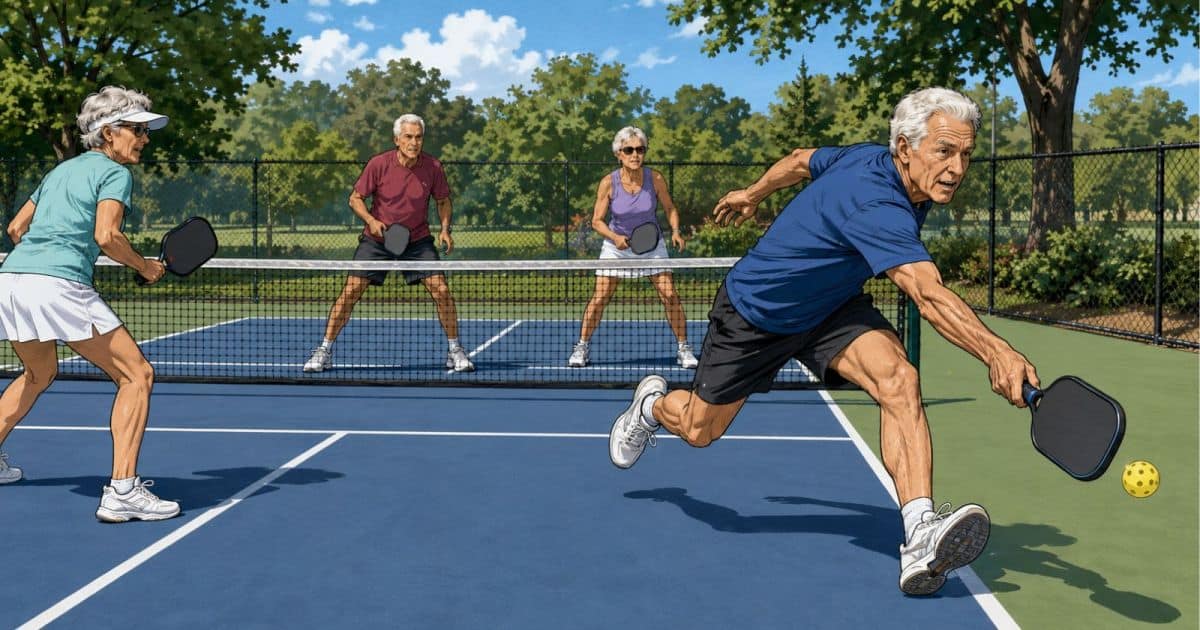
- Image alt text: Older player balancing during a controlled pickleball shot on a dry court
- Funnel category: Physicians and Therapists