Can You Play Pickleball With Bad Knees? Tips for Low-Impact Play
Quick Answer: Yes, many people with bad knees can play pickleball, since it is lower-impact than tennis and involves less running. Sports medicine specialists note that even people with knee arthritis often can play, with precautions. The keys are strengthening the muscles around the knee, warming up, wearing supportive shoes, and choosing doubles.
Bad knees can mean anything from arthritis to old injuries to general wear, and the good news is that pickleball is one of the more knee-friendly sports. It is played on a small court with a slower ball, so it asks less of your knees than tennis or running. Still, it is not zero-impact, so a smart approach matters.
Can you really play pickleball with bad knees?
Often yes, with the right precautions. Sports medicine specialists at the Hospital for Special Surgery describe pickleball as relatively safe even for older players and people who have never played a sport, partly because it is less demanding than tennis and requires less running. They also note that people with knee osteoarthritis generally should not be afraid to play.
That said, the sport does put some stress on the knees:
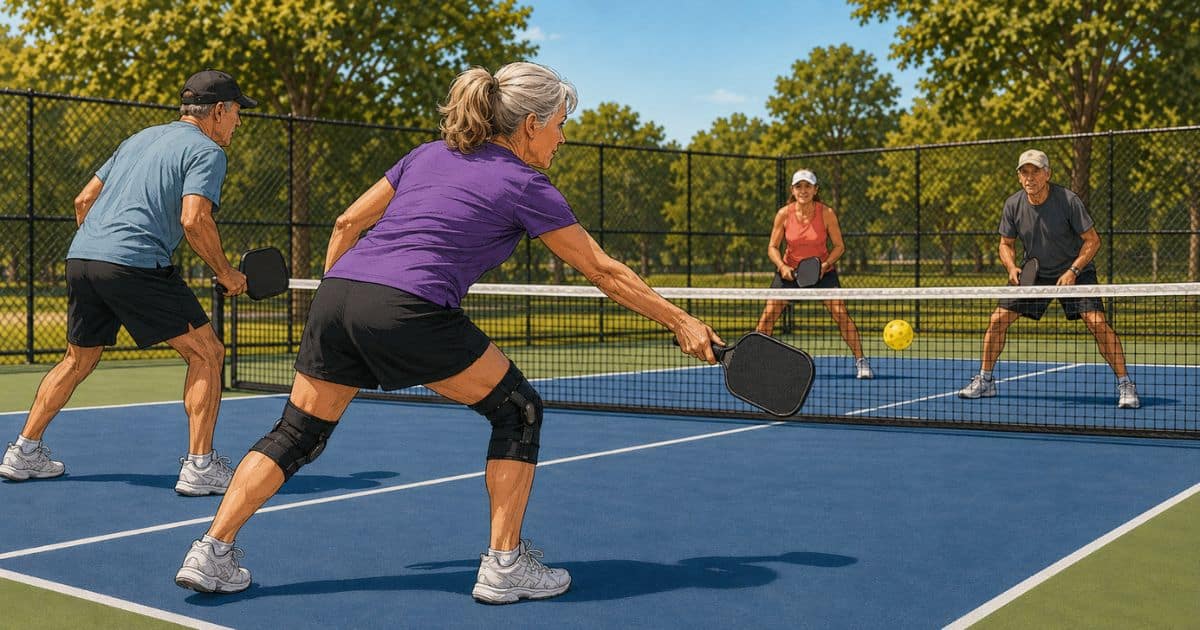
- A lot of the game is played in a slight crouch, which loads the knees.
- Quick stops and direction changes stress the joint.
- Balance challenges can lead to falls, which are a real risk for the knees.
So the honest answer is that bad knees are usually a reason to play smart, not a reason to sit out. Get your doctor’s input first, especially if you have significant arthritis, instability, or a recent injury.
How can you protect your knees on the court?
Strengthen, warm up, and gear up. The single best thing you can do for bad knees is build the muscles that support them. Strong legs take load off the joint and improve stability.
Knee-protecting steps:
- Strengthen your quads, glutes, and core. Strong supporting muscles stabilize the knee. Our off-court workouts guide covers the right exercises.
- Warm up before play with dynamic movement, using our warm-up routine.
- Wear supportive court shoes with good lateral grip, not worn-out runners.
- Consider a knee sleeve or brace if your doctor or physical therapist recommends one.
- Stretch afterward to ease stiffness, per our post-play stretches.
A knee sleeve can add comfort and support for some players, but it is not a substitute for strengthening. Build the muscle and the joint thanks you.
How should you play to reduce knee strain?
Play doubles, ease in, and respect pain. How you play matters as much as how you prepare. A few adjustments make the game far gentler on bad knees.
Smart play habits:
- Choose doubles over singles to cut down on running and court coverage.
- Ramp up gradually rather than jumping into hours of daily play.
- Avoid lunging too hard and sudden stops when you can.
- Watch your footing to prevent falls, especially on wet courts.
- Stop if you feel sharp or worsening pain, which is different from normal effort.
See your doctor or a physical therapist or sports medicine provider if you have swelling, instability, locking, or pain that gets worse over time. Those are signs that need a professional look before you keep playing.
Frequently asked questions
Is pickleball OK for bad knees? Often yes, with precautions. It is lower-impact than tennis, and specialists say even people with knee arthritis can usually play. Strengthening, warming up, and playing doubles all help. Check with your doctor first.
Is pickleball bad for your knees? It is relatively gentle, but the crouched stance, quick stops, and fall risk do stress the knees. Preparing your body and playing smart keeps the strain manageable for most people.
Can you play pickleball with arthritis in your knees? Often yes. Movement can actually help arthritic joints, and pickleball is low-impact. See our guide on pickleball with arthritis, and get your doctor’s okay first.
Should I wear a knee brace for pickleball? A sleeve or brace helps some players with comfort and support, but it does not replace strengthening the muscles around the knee. Ask your doctor or physical therapist what is right for you.
What exercises help my knees for pickleball? Strengthening the quads, glutes, and core stabilizes the knee, and balance work reduces fall risk. Our off-court workouts guide has specifics.
When should I see a doctor about knee pain? If you have swelling, instability, locking, or pain that worsens over time or lingers well beyond normal post-play soreness, see a doctor or physical therapist before continuing.
Bad knees usually call for smarter play, not the sidelines. Build the support with our off-court workouts and warm-up routine, and if your knees are giving you trouble, a physical therapist or sports medicine provider can tailor a plan to keep you playing.
This article is general information, not medical advice. If you have a knee condition, talk with your doctor before playing.
Written by the Pickler Junction Team.