What Is a Pickleball Lounge? How They Differ from Traditional Courts
Quick Answer: A pickleball lounge is an indoor venue that pairs courts with a bar, food, and lounge seating, built for hanging out as much as playing. A traditional court exists mainly for the game, while a lounge, such as Pickle & Social near Atlanta, markets itself as a social club first. Lounges suit players who want atmosphere along with pickleball.
The pickleball lounge is a newer format in the social side of the sport, one that treats the courts as part of a bigger night out rather than the whole point. Here is what defines a lounge, how it differs from a plain court, and who tends to enjoy it most.
What is a pickleball lounge?
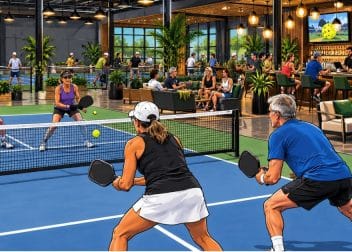
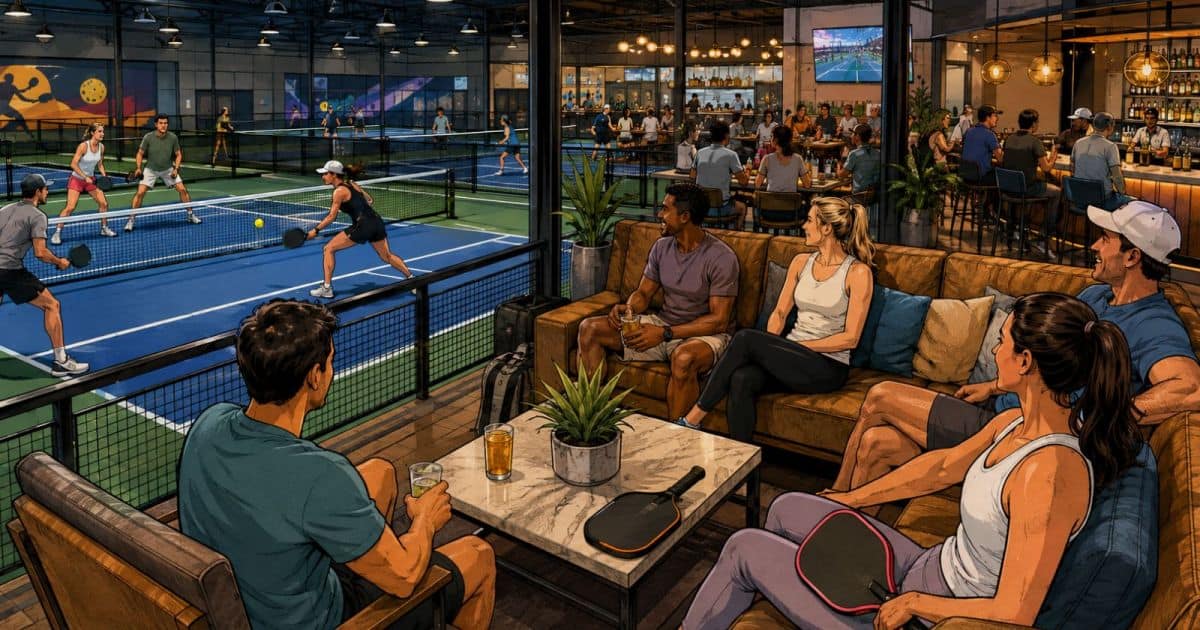
A lounge is a venue built around atmosphere first and the game second. Most pack indoor courts into a space that also carries a full bar, a kitchen, and comfortable seating meant for lingering before and after play.
Pickle & Social, a venue near Atlanta, describes itself on its own website as an entertainment venue and social club, pairing indoor and outdoor courts with a full bar and a chef-inspired food menu. That mix, courts plus a bar plus a menu built for hanging out, is the template most lounges follow.
What you typically find at a lounge:
- Indoor pickleball courts, sometimes alongside a smaller number of outdoor courts.
- A full bar, usually stocked with cocktails, beer, and wine.
- A kitchen menu, since food is part of the draw, not an afterthought.
- Lounge-style seating, built for groups to sit, eat, and watch a game rather than just wait for a court.
- A social, low-key atmosphere, designed for players to stay for a few hours, not just one match.
The point of a lounge is the whole evening, not just the score.
How does a lounge differ from a traditional court?
A traditional court, at a park, rec center, or club, exists to host the game and little else. A lounge builds a night around the game instead.
Cost is one clear difference. A drop-in session at a municipal court commonly costs $2 to $6, while an open-play session at a private indoor facility runs $10 to $20, as of September 2026. A lounge usually charges more, since the fee covers seating, staff, and amenities beyond the court itself. Players who want a plain court and nothing else are better served by a guide to public pickleball courts or indoor pickleball courts, or by Pickleheads, USA Pickleball’s official court finder with more than 25,000 places to play.
Scale is another difference. A lounge tends to run a handful of courts built around a bar and a dining room. A larger entertainment complex, such as Chicken N Pickle, runs far more. Its own website lists indoor and outdoor pickleball courts plus games including shuffleboard, cornhole, and bocce across 13 locations. That scale fits a full entertainment center more than a lounge. For that broader category, see the guide to pickleball entertainment centers.
In short:
- Purpose: a traditional court is for playing; a lounge is for playing and socializing.
- Atmosphere: a lounge is styled and relaxed; a court is purely functional.
- Amenities: a lounge adds a bar, a kitchen, and seating; a court adds little beyond the fence and the net.
- Cost: a lounge typically costs more than a municipal drop-in session, since the fee covers more than court time.
Who is a pickleball lounge for?
A lounge suits players who want the social side of the sport as much as the game itself.
Pickleball has grown fast enough to support that kind of venue. The sport reached an estimated 24.3 million players in the United States in 2025, up from 4.2 million in 2020, according to the Sports & Fitness Industry Association (SFIA). That growth has pulled in venues built for more than just court time.
Who tends to enjoy a lounge:
- Social players and groups who want food, drinks, and company along with their games.
- Date-nighters, drawn to a setting built for two people to relax together. See the guide to pickleball date night.
- Beginners, who often prefer a low-pressure room over a competitive club.
- Casual players who treat pickleball as one part of a night out, not the whole plan.
Players chasing a serious, competitive game are usually better served by a plain court or a dedicated club. A lounge is built for players who want the sport and the hangout in one stop.
Frequently asked questions
What is a pickleball lounge? A pickleball lounge is a venue that pairs indoor pickleball courts with a bar, a food menu, and comfortable social seating, built for players who want to hang out as much as play.
How is a lounge different from a regular court? A regular court, at a park or rec center, exists mainly for the game. A lounge adds a bar, a kitchen, and lounge seating, and it usually costs more than a municipal drop-in session.
Do pickleball lounges serve food and drinks? Yes. Venues such as Pickle & Social build a full bar and a food menu into the core experience, not as an add-on to the courts, according to the venue’s own website.
Is a pickleball lounge good for beginners? Yes. The relaxed, low-pressure setting suits beginners who want to play without the pressure of a competitive club.
Are pickleball lounges the same as pickleball entertainment centers? Not exactly. A lounge is a smaller, bar-forward format. A larger complex such as Chicken N Pickle adds more courts, more games, and more locations, which fits the broader entertainment center category.
How much does it cost to play at a pickleball lounge? Lounges set their own pricing, and it typically runs above a municipal drop-in session, which costs $2 to $6, since the lounge fee covers seating, staff, and amenities beyond the court.
Do pickleball lounges require reservations or paddle rentals? Policies vary by venue. Checking a specific lounge’s website before a visit is the surest way to confirm reservation rules and equipment rental.
A pickleball lounge is for players who want the social side of the sport built into the venue itself, not just the score. Browse the pickleball entertainment centers directory to find a lounge or entertainment venue near you.
Written by the Pickler Junction Team.